


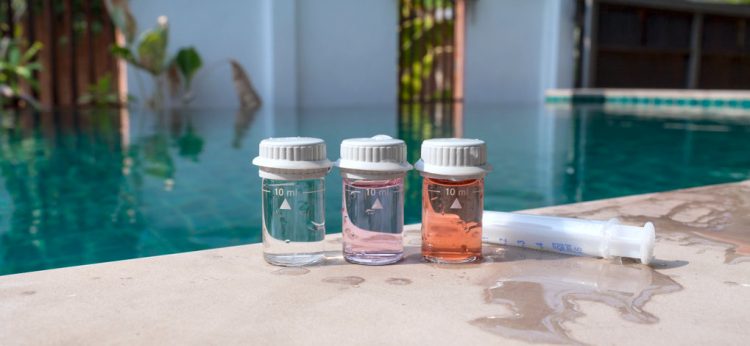
Pool water is sensitive, and it must be adjusted to achieve ideal pool harmony. It must neither be too soft nor too hard.
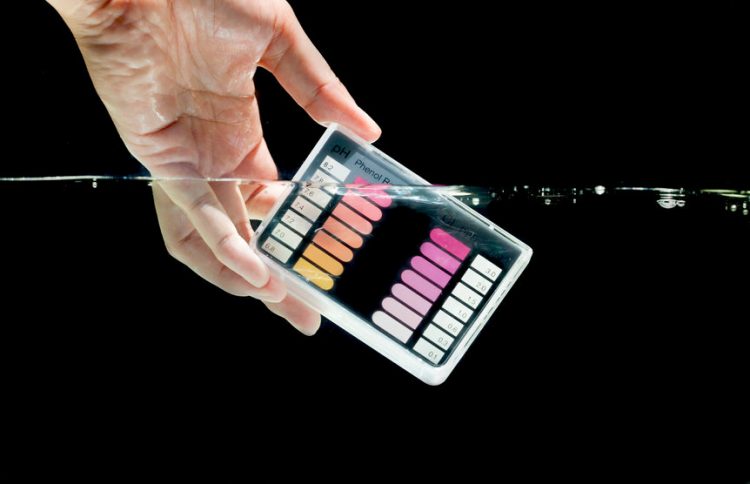
It must be just right. Maintaining the pH of your pool between 7.4 and 7.6, which is slightly over neutral on the pH scale, is regarded as balancing.
The following is the right order in which to add pool chemicals:
- Total Alkalinity
- pH
- Calcium Hardness
- Sanitizer (chlorine)
- Cyanuric Acid (CYA)
Here’s why adding pool chemicals in the above sequence is a good idea:
- Total alkalinity aids in the stabilization and prevention of pH fluctuations. Adjusting TA first makes it simpler to adjust pH afterward.
- The physical “softness” of your water is affected by calcium hardness. It’s also a lot easier to change when your pool is first balanced.
- Your water will feel great and your chlorine will operate efficiently if the pH is between 7.2 and 7.5. Higher pH levels, on the other hand, diminish chlorine efficiency by 50% or more.
- CYA protects chlorine from sun damage and helps it last longer by acting as a direct stabilizer. Since most chlorine products already include CYA, test your water before adding CYA to avert chlorine lock.
Total Alkalinity
The ideal alkalinity level is between 100 and 150 ppm. Alkalinity acts as a pH buffer.
It prevents the pH from rapidly changing up and down the scale by absorbing large changes in the water before they impact the pH.
Alkaline levels may readily change, so it’s also a good idea to maintain a large supply of alkalinity increaser on hand.
pH
The ideal pH level is between 7.4 and 7.6. pH on its own is unstable. The pH level may be affected by rainwater, swimmers, and just about everything else that enters the water.
When the pH of your water is low, it is acidic, and when it is high, it is basic. Keep a large supply of pH Increaser on hand because pH levels can fluctuate a lot.
If you’re having pH balance issues, keep an eye on your alkalinity levels as well, since alkalinity increasers boost your pool’s pH level as well.
Calcium Hardness
The recommended calcium hardness level is between 175 and 300 parts per million (ppm). Without calcium, your water will develop a need for it and will strive to satisfy its thirst by eating on your pool’s plaster and other sources. This is essentially what calcification on a pool’s walls and floor is.
In the long term, adding calcium hardness to water will help safeguard the pool walls and equipment. Too much calcium, on the other hand, can lead to scaling and other problems.
Sanitizer (Chlorine)
Chlorine is the most prevalent type of pool sanitizer. However, there are alternative options, such as salt, stabilized chlorine, and minerals.
Chlorine eliminates germs and keeps pool algae from growing. To keep your pool clean and clear, use chlorine pills or granules once a week.
Add high purity pool salt and chlorine products to salt pools. Maintain a free chlorine concentration of 1–4 ppm.
Cyanuric Acid (CYA)
The majority of chlorine compounds used in water are stabilized chlorine. If you start with freshwater, you may wish to add some cyanuric acid (aka water stabilizer) as a stabilizer base to prevent the chlorine from being burnt off by the sun’s UV rays. This substance shields your chlorine from the sun.

Conclusions
In a nutshell to maintain a healthy and safe swimming pool one will need at least the following weekly:
- Chlorine Tablets: 2 tablets per 10,000 liters of water each week
- Swimming Pool Shock: 1 pound per 10,000 gallons of water weekly
- Alkalinity Enhancer (sodium bicarbonate): To boost TA by 10 ppm, use one pound per 10,000 liters.
- Alkalinity Reducer (dry acid): To reduce TA by 10 ppm, use 2 pounds per 10,000 gallons of water.
- Calcium hardness increaser (calcium chloride): To raise Calcium Hardness by 8 ppm, use one pound per 10,000 liters.
- Cyanuric Acid: To boost CYA by 12 ppm, add one pound every 10,000 gallons of water.
- Pool Algaecide:3 ounces per 10,000 gallons of water per week
Part of the weekly pool maintenance at SunValley Pool Service is to test and adjust water chemistry. Call us today to get yourself on our schedule.