





According to new research, your swimming pool may be more dangerous than you think. Some chemicals’ hazards have been matched to those of secondhand smoking by researchers.
Chlorine and other chemicals react with organic matter during ordinary chemical disinfection, producing hundreds of new compounds that have been related to asthma, allergies, and even cancer.
But there is some good news. There are ways to make our swimming pools safer than ever.
The Fierce Debate
It should come as no surprise that chemical sellers frequently prescribe a bewildering array of chemicals for swimming pools. What you might not realize is that those chemicals might endanger you, your family, and anybody who swims in your pool.
We’ve been hearing about becoming green for years, but only recently have experts and toxicologists begun to investigate the consequences of pool chemicals.
There is already a plethora of respectable studies that have discovered severe flaws in the way most pools are cleaned.
 Scientific Studies Changing the Pool Industry
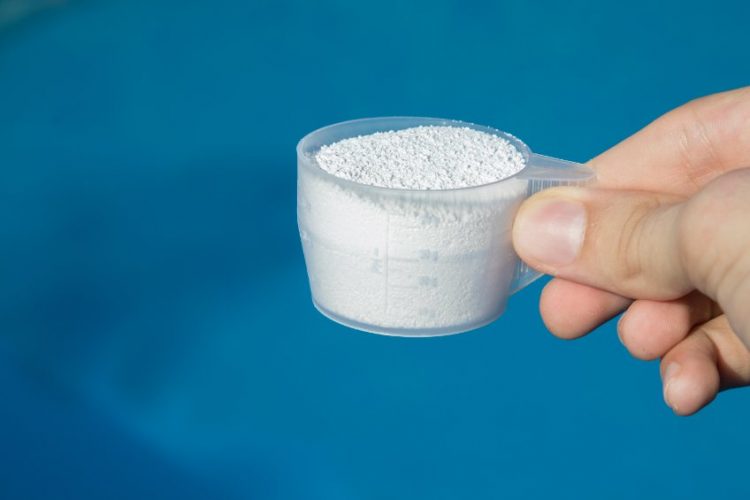
According to studies, pool chemicals and their by-products (certain chemicals mix to generate new chemicals) cause burning eyes, skin irritation, allergies, asthma, and increased cancer rates. There are persuasive and reliable studies proving this from reputable academic institutions in recent years.
Researchers discovered that the level of chlorine contained in swimming pools is high. Repeated exposure to ordinary chlorine levels can cause a slew of problems. Second, the most toxic chemicals in pools are disinfection by-products, which are known to increase the risk of asthma and allergies.
The most serious consequences included an increased chance of bladder cancer. Everything boils down to this. There’s a lot on the line.
If you are curious about which specific chemicals you should be putting in your pool, check out this article titled, “What Pool Chemicals Do I Need?”
Pools with reduced chlorine levels are recommended by researchers. This is backed up by studies that demonstrated no negative effects of chlorine at a low dosage of 0.5 ppm.
The Dangers of Swimming in Pool Chemicals
Swimming in pool chemicals and myriads of disinfection by-products have been attributed to a dizzying array of health problems. All chemically disinfected pools, even salt-water pools, could be adversely affected if homeowners are not cautious with the chemical amounts.
Chlorine and other chemicals react with organic matter during ordinary swimming pool sanitation to generate hundreds of disinfection by-products that have been related to asthma, allergies, and even cancer.
How Could this Happen?
Pool owners have been persuaded for decades that they need a slew of chemicals to keep their water clean. Often, the suggested doses of substances were untested and unsupported.
This has many people questioning who should be in charge of regulating the pool chemical sector. Although a few chemicals in pools are controlled, the vast majority of chemicals found in pools are not subject to health or safety rules and may be present in any proportion.
Furthermore, the states lack public health norms for more than 90% of the disinfection by-products. While state public pool laws would not directly affect private swimming pools, the subsequent study and body of knowledge from stronger public pool regulation would benefit all pools.
According to the most recent research, state pool water quality regulators should conduct an in-depth examination of swimming pool water quality in order to protect the public interest. There is a need for a coordinated state-level effort to develop new safety standards, identify preventative priorities, and educate the public about the entire spectrum of toxins that may be present in swimming pool water.
Pro Tip: Prevention is the key to preventing harm in the pool! Make sure you follow all of the pool’s safety standards, as well as the directions for using the pool chemicals.
How Can We Make Swimming Pools Safe?


The solution is tried and true. Ultraviolet radiation is developed to safely remove hazardous chlorine byproducts, allowing us to safeguard what is vital. UV technology drastically reduces the need for chlorine and eliminates chlorine by-products, resulting in a cleaner, safer, and easier-to-manage swimming pool or spa.
UV lighting has been installed in thousands of pools and has established the “gold standard” in large aquatic facilities. UV was showcased to the world when it was chosen to protect swimmers at the Beijing Olympics. UV can now assist you.
Conclusion
UV Pool Systems use ultraviolet light to reduce chemical levels, remove chlorine byproducts, and make pools safer, healthier, and simpler to operate. When it comes to pool chemicals, researchers say less is more.
Always read product labels and follow instructions given. For more information on pool safety read, “Pool Safety Tips.”