



Owning a pool can be a great joy. It’s the perfect place to throw poolside parties, swimming workouts, and weekends spent lounging with family, and friends. But if you don’t keep your pool clean, crystal clear and safe, it isn’t enjoyable.
With this in mind, you need to understand how and when to test your pool water not only to maintain the pool and its equipment but also to ensure a good balance of chemicals for your family.
Wondering where to start from? Don’t worry! This blog will help you understand the basics of pool water testing, including pool test kits and the schedule for testing. Keep reading!
How to Test Pool Water
Getting an accurate reading of your water chemistry shouldn’t be a complicated endeavor, as long as you have the right pool test kits and know how to use them.
There are three methods to test pool water and they include:
- Use of a liquid test kit
- Use of a test strip and,
- Hiring a professional to test your water
All these methods are aimed at establishing the pH, Chlorine, Total alkalinity, and Acid demand of pool water.
ProTip Takeaway: Regular testing is essential not only for maintaining the pool’s equipment, but also for ensuring a clean and safe swimming environment.
Liquid test kit
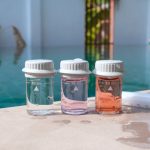
A liquid test kit also referred to as Reagent Color Test Block, uses a testing container with reagents (phenol red and orthotolidine or OTO) that come in the dropper bottles. With this test kit, phenol red and orthotolidine or OTO are used for pH and chlorine testing respectively.
Procedure: Using an empty container included in the test kit, collect a water sample away from jets, skimmers, or return fittings. On the side labeled ‘pH testing,’ add the recommended number of drops of phenol red to the water sample. As recommended in the instructions provided by the kit, add droplets of OTC to the side designated for chlorine testing.
ProTip Takeaway: A liquid test kit is the most recommended type of at-home test, thanks to the accurate results it gives and the fact that it tests for multiple water chemistries.
Test strips
If you are looking for the quickest and cheapest way to test your pool water, Test Strips can be your perfect option. This testing method is user-friendly and can be used to check for alkalinity, chlorine, and pH. However, other pool water tests such as tests for bromine, iron, copper, and salt, can also be performed using specialty strips.
Procedure: Using a clean container, take a sample of water from the pool. Dip the strips in water quickly in and out, and hold them in the air for around 10-15 seconds. Match the colors on the strip on the packaging and adjust your pool chemicals as recommended.
ProTip Takeaway: Recommended testing ranges include pH: 7.4-7.6, Chlorine: 2.0-4.0 parts per million (ppm), Cyanuric Acid: 30-50 ppm, Calcium Hardness: 200-400 ppm, and, Total Alkalinity: 80-120 parts per million (ppm).
Professional pool water testing
If you don’t know how to adjust chemicals accordingly, it’s a good idea to hire a professional to test your water. A pool professional will test your water and put the right chemicals in your pool. Pool experts will also handle the diagnosis and balancing of chemicals for you.
When to test pool water
Though there’s no set guideline for when to test your pool water, it’s advisable to test all parameters often. Pool professionals recommend the following schedule for testing your pool water:
| Test | Frequency |
| Chlorine levels | 2-3 times per week |
| pH | 2-3 times each week |
| Acid demand test | Whenever pH levels require balancing |
| Total alkalinity (TA) | Weekly |
| Cyanuric acid levels | Monthly |
| Calcium hardness | Monthly |
| Total dissolved solids (TDS) | Monthly |
 Conclusion


It is very important to maintain proper chemical levels in your pool. With user-friendly liquid test kits and instant test strips, you can take control of your pool water testing and avoid costly repairs.